Which U.S. Cities Have the Worst Traffic for Executives
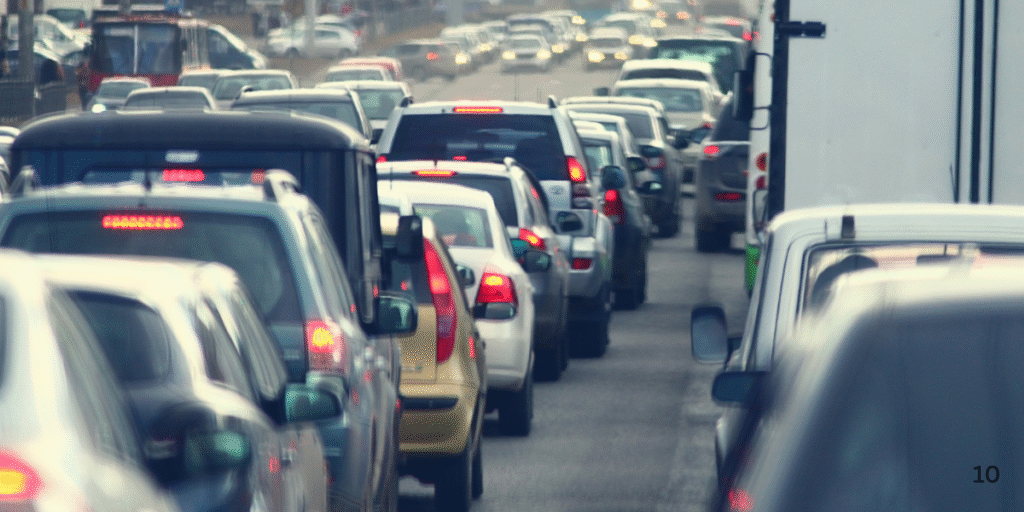
Traffic congestion is not just an inconvenience; for executives, it is a measurable business risk. Missed meetings, delayed airport transfers, and unreliable travel times can disrupt entire schedules. Using data from INRIX, TomTom, and the Texas A&M Transportation Institute, combined with on-the-ground realities, we can identify the U.S. cities where executives face the most difficulty moving between airports, central business districts, and key venues.
At YAZ Luxury Transportation Corp., we manage these risks every day for corporate clients. Our chauffeurs and dispatchers understand how to build schedules that withstand congestion in the nation’s busiest metros. This article highlights the cities with the worst traffic for executives and explains how professional ground transportation mitigates delays.
How “Worst” Is Measured
Different studies define traffic differently. INRIX’s Global Traffic Scorecard focuses on annual hours lost in congestion. TomTom’s Traffic Index measures average travel time per 10 km and overall speed. The Texas A&M Urban Mobility Report looks at long-term travel time trends. While these metrics capture general congestion, executives care about something more specific: airport-to-downtown reliability and the ability to move between multiple meetings without schedule failures.
Our review blends the rankings with practical concerns: airport access, gridlock in central districts, and disruption caused by weather, events, and security protocols.
New York City, New York
New York remains the most congested city in the United States. TomTom’s 2024 index ranks it the slowest large metro, with average trips of more than 30 minutes for just 10 kilometers. Congestion is constant in Manhattan, and incidents on bridges and tunnels quickly ripple across boroughs.
For executives, the main challenge is moving between airports and Midtown. A trip from LaGuardia to Manhattan can range from 25 minutes in ideal conditions to over an hour during evening peaks. Travel from JFK to Midtown is even more volatile because of Van Wyck Expressway bottlenecks. Once in Manhattan, one-way streets and restricted curbs complicate drop-offs.
Executives often require precise curbside sequencing outside office towers or hotels. Without a chauffeur who knows Midtown’s permitted stops and building security requirements, delays are inevitable.
Our New York City limo service ensures executives move efficiently between airports, Midtown, and the Financial District. Chauffeurs familiar with building security rules and curb access save valuable minutes.
Chicago, Illinois
Chicago consistently ranks near the top for traffic delays. INRIX reported more than 100 hours lost per driver annually. Congestion is aggravated by construction and harsh winters that slow expressways.
The Kennedy Expressway (I-90) from O’Hare to the Loop is the most critical corridor for executives. A journey scheduled at 30 minutes can double during morning rush or in snow conditions. Once downtown, the Loop’s grid sees recurring bottlenecks near the river crossings and Lake Shore Drive.
For executives attending multiple meetings in River North, West Loop, and suburban corporate campuses, having a standby vehicle or flexible routing is essential. Professional chauffeurs adjust on the fly, avoiding lower-Wacker tie-ups or using express lanes when open.
Los Angeles, California
Los Angeles traffic has been infamous for decades, and it remains among the worst in the country. INRIX lists nearly 90 hours lost annually, and TomTom ranks LA near the bottom for average speeds.
For executives, the LAX corridor presents the most risk. Sepulveda Boulevard and the 405 Freeway consistently jam during peak periods. Moving from LAX to Downtown Los Angeles can take 40 minutes in off-peak hours or well over an hour during afternoon congestion. Corporate travelers also encounter volatility traveling to Santa Monica, Beverly Hills, or Century City.
Event schedules add complexity. Major concerts, Lakers and Clippers games, or red-carpet premieres create unpredictable gridlock. Chauffeurs with local knowledge use HOV lanes, canyon routes, or surface-street alternates to stabilize schedules.
Our Los Angeles limo service assigns chauffeurs trained in LAX pickup rules and canyon alternate routes. Using express lanes and local knowledge, we stabilize arrival times for executives.
San Francisco, California
San Francisco ranks near the top of congestion studies year after year. Compact geography, bridge dependence, and limited road capacity all contribute. A trip across the Bay Bridge can add 30 minutes or more to a schedule if poorly timed.
Executives traveling from SFO to SoMa or the Financial District face recurring delays on Highway 101 and downtown approaches. Construction zones near the Salesforce Transit Center or Moscone Center frequently compound congestion.
With limited curb space in downtown San Francisco, chauffeurs must time arrivals carefully to avoid circling. Coordination is especially important for executives attending conferences or investor meetings where time windows are tight.
Our San Francisco limo service provides precise curbside drop-offs in SoMa and the Financial District. We time bridge crossings and position vehicles near key venues to eliminate unnecessary delays.
Washington, D.C.
Washington, D.C. is one of the most unpredictable traffic environments for executives. Recent rankings place it at or near the top of U.S. congestion. While average commute times are long, what matters most for business travel are federal security restrictions and rolling road closures for motorcades.
Transfers between Reagan National Airport (DCA) and K Street or Capitol Hill can vary widely. Routes that take 15 minutes off-peak can extend well past 40 minutes during rush or after a security event.
Professional chauffeurs familiar with federal protocols know alternate pickup zones and security perimeter adjustments, ensuring executives reach high-security sites on time.
Boston, Massachusetts
Boston combines high congestion with a compact, historic street grid. INRIX and TomTom consistently rank it among the slowest metros. For executives, Logan Airport transfers to the Seaport or Back Bay are often disrupted by tunnel dependencies.
Seasonal factors add further risk. Snowstorms reduce speeds across I-93 and Mass Pike, while summer events near Fenway Park or TD Garden create evening delays. Chauffeurs mitigate these by staging in advance and using surface-street alternates to avoid blocked tunnels.
Miami, Florida
Miami’s traffic reflects both heavy tourism and population growth. Causeways connecting Miami Beach to downtown create chokepoints, and MIA airport transfers to Brickell or Wynwood are unpredictable during event weeks.
Executives flying in for Art Basel or the Miami International Boat Show often encounter complete causeway standstills. Professional routing through SR-836 or SR-112 toll facilities provides an advantage, but only chauffeurs with local expertise can make those decisions in real time.
Atlanta, Georgia
Atlanta’s traffic is dominated by the I-285 Perimeter and radial interstates. Peak congestion around I-75/I-85 through Midtown and Downtown frequently creates hour-long delays. Travel from Hartsfield-Jackson Atlanta International Airport to Buckhead can fluctuate between 30 and 75 minutes depending on conditions.
Executives benefit from chauffeurs who know when to use Peach Pass Express Lanes and how to adjust around weather events that quickly paralyze the region.
Seattle, Washington
Seattle consistently appears in rankings of worst congestion. The reliance on bridges and narrow corridors means a single accident can cripple traffic across I-5 or I-405. Transfers from SEA airport to South Lake Union or Capitol Hill are particularly vulnerable.
Executives visiting technology campuses require precise timing for meetings. Our chauffeurs adjust for event calendars, including Mariners or Seahawks games that create late-day gridlock.
Other Rising Congestion Hubs
Houston, Philadelphia, and Portland also appear in congestion studies. In Houston, airport transfers to the Energy Corridor can be unpredictable. Philadelphia’s reliance on I-95 and Schuylkill Expressway creates daily delays. Portland, with fewer alternates, ranks poorly despite its smaller size. Executives traveling to these markets should not assume secondary status means smooth travel.
Patterns Executives Should Plan Around
Executives need to think beyond the average commute time. In these markets, the following patterns consistently cause disruption:
- Event calendars: Professional sports, conventions, and federal ceremonies increase travel times.
- Weather: Snow in Chicago or Boston, heavy rain in Los Angeles, and hurricanes in Miami all magnify congestion.
- Infrastructure limits: Bridge and tunnel closures in New York, San Francisco, and Seattle create binary delays.
- Tourism surges: Miami, Orlando, and San Francisco see unpredictable congestion during holiday travel seasons.
A well-planned itinerary accounts for these risks and builds in buffers.
How YAZ Luxury Transportation Reduces Risk
Executives cannot afford schedule failures. At YAZ Luxury Transportation Corp., we design transportation strategies around congestion data and live monitoring. Our chauffeurs plan backward from meeting start times, using INRIX and TomTom trend profiles, FDOT and DOT alerts, and live navigation feeds.
We deploy the right vehicle for the assignment. Solo executives are best served in luxury sedans or town cars. Teams traveling together often use SUVs such as Cadillac Escalade, GMC Yukon Denali, or Chevy Suburban. For VIP movements, stretch limousines or Sprinter CEO coaches offer both comfort and presence. Larger groups—corporate teams, delegations, or conference attendees—are assigned mini buses or motor coaches to ensure timely arrivals.
Our operational model includes:
- Airport expertise: We understand pickup restrictions at JFK, LAX, ORD, DCA, and SFO, reducing re-circling delays.
- Contingency planning: We maintain standby vehicles when itineraries are high-stakes.
- 100% punctuality guarantee: We back every booking with a commitment to on-time performance.
Executives face the most complex travel challenges in congested metros. With our fleet and planning, those risks become manageable.
FAQs
Which U.S. city currently has the worst traffic for executives?
Rankings vary by dataset, but New York, Chicago, Los Angeles, and Washington, D.C. consistently appear in the top tier.
Why is airport-to-downtown reliability the key metric?
Executives usually need to transfer from an airport to central business districts quickly. A short disruption on that corridor can derail an entire schedule.
Can professional chauffeurs actually reduce travel time?
They cannot remove congestion, but they minimize uncertainty through alternate routing, correct curbside choices, and pre-planned schedules.
Are rideshares sufficient for executive schedules?
For casual trips, yes. For multi-stop itineraries with board-level timing requirements, professional chauffeur service provides higher reliability.
Which cities have toll or express lanes that help executives?
Los Angeles, Atlanta, Houston, and parts of Washington, D.C. all offer express or toll lanes. Knowledge of pricing and entry points is critical.
Final Thoughts
Congestion in U.S. cities continues to cost executives hours of productivity each year. New York, Chicago, Los Angeles, San Francisco, Washington, D.C., and several others stand out as the most challenging. What matters most is not the overall ranking but the airport-to-downtown reliability that executives depend on.
At YAZ Luxury Transportation Corp., we specialize in reducing that risk. By matching the right vehicle to the assignment, using real-time routing, and planning around known traffic patterns, we help executives maintain control of their schedules in the country’s most congested markets.