
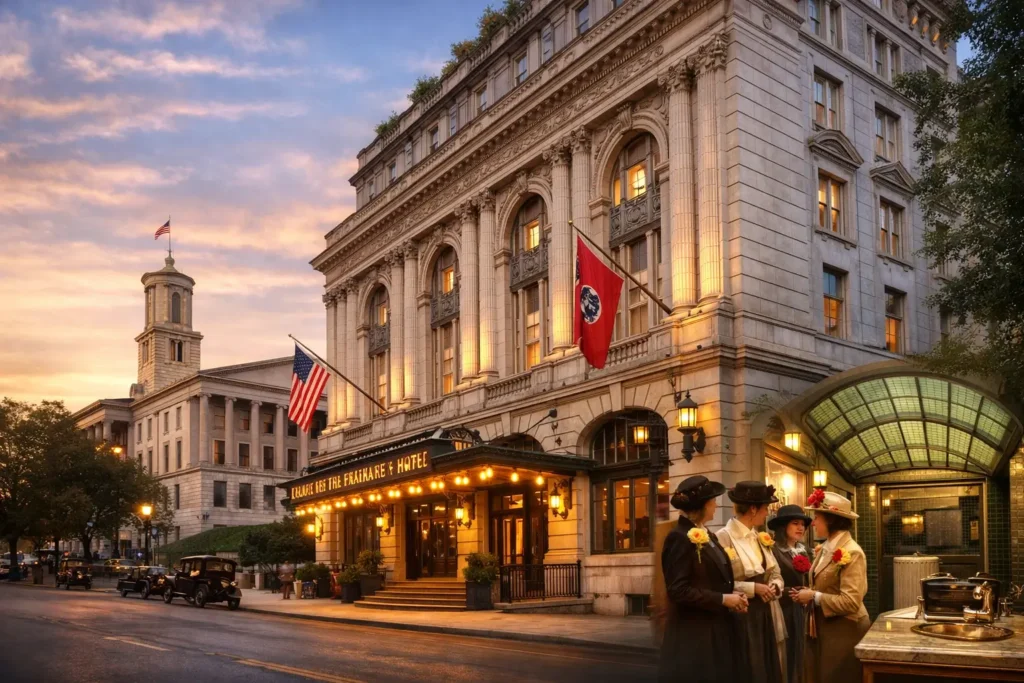
When people think about historic places in Nashville, music venues often get most of the attention. Yet one of the city’s most important landmarks is not a concert hall at all. The Hermitage Hotel has stood in downtown Nashville for more than a century, and its story is tied to politics, architecture, luxury, and one of the most important civil rights victories in American history. More than just a beautiful place to stay, it is a building that has witnessed major moments that helped shape both Nashville and the nation.
Opened in 1910, The Hermitage Hotel quickly became a symbol of sophistication in Tennessee. It was created at a time when Nashville was growing in importance and local leaders wanted a grand hotel that reflected the city’s ambitions. Over the years, the property became known for its elegant interiors, famous visitors, and unmatched reputation for service. But what truly separates The Hermitage Hotel from other historic hotels is the role it played in the final battle for women’s suffrage in 1920. That single chapter alone gives the building a national historical importance that goes far beyond hospitality.
When The Hermitage Hotel Was Built
The Hermitage Hotel opened its doors on September 17, 1910. At the time, Nashville business leaders believed the city needed a first-class hotel that could welcome politicians, wealthy travelers, and distinguished guests in a setting that matched the city’s growing reputation. The result was a luxury property that was often described as Nashville’s first “million-dollar hotel,” a major statement in the early twentieth century.
Its opening marked a new era for downtown Nashville. The city was evolving, and The Hermitage Hotel arrived as a visible sign of confidence and progress. It gave Nashville a refined gathering place where business, politics, and social life could all meet under one roof. From the beginning, the hotel was designed to impress, and it did exactly that.
A Grand Hotel For A Growing Nashville
In the early 1900s, large hotels were more than places to sleep. They were public spaces where deals were made, ideas were exchanged, and influential people gathered. The Hermitage Hotel quickly became one of those places for Nashville. Its location near the Tennessee State Capitol made it especially important for politicians, lobbyists, lawyers, and visitors involved in state business.
Because of that setting, the hotel became deeply connected to public life in Nashville. Travelers came for comfort and elegance, but locals also viewed it as a symbol of civic pride. It was the kind of building that told the world Nashville was no longer just a regional city. It was becoming a place of greater cultural and political importance.
The Architecture That Made It Famous
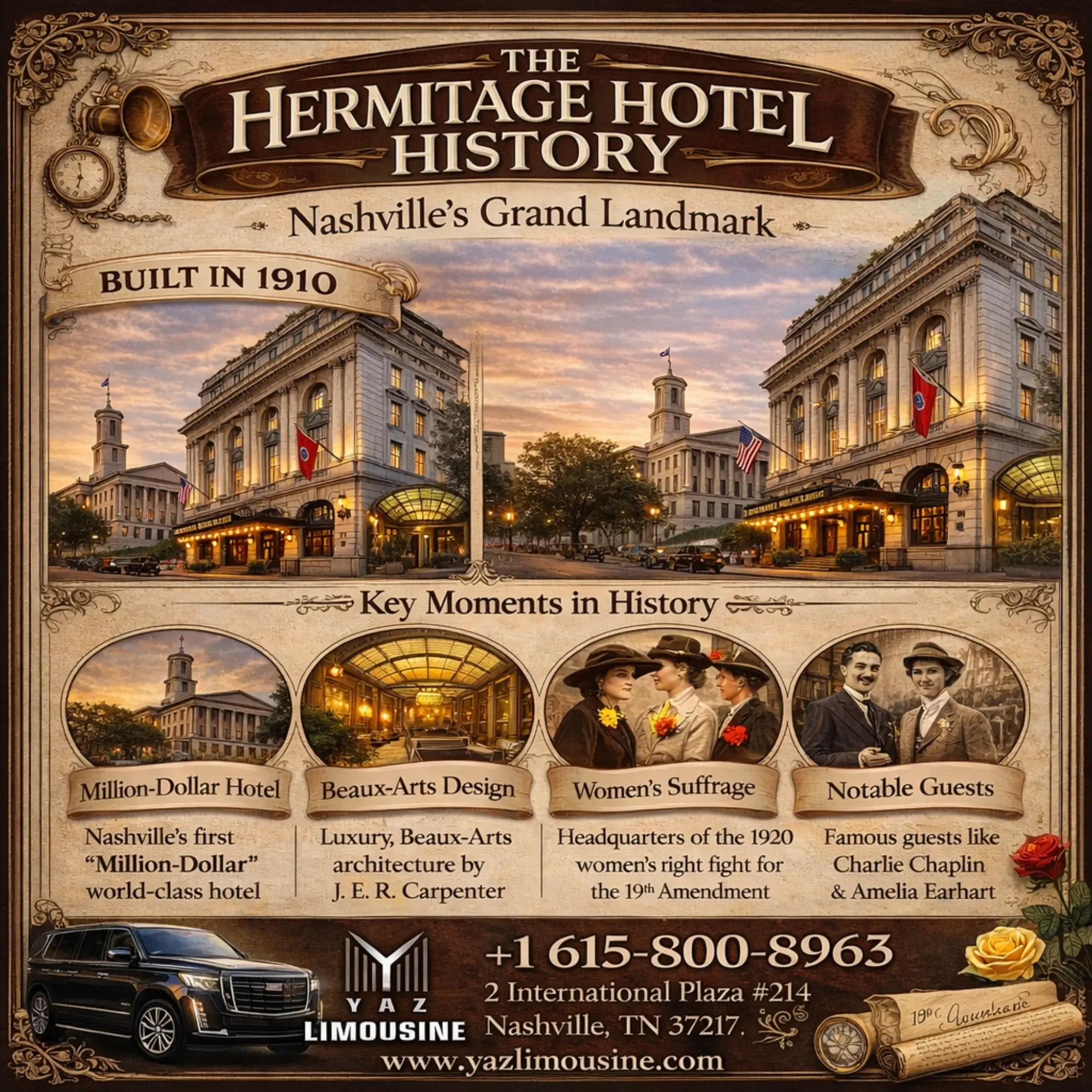
Part of the hotel’s lasting appeal comes from its remarkable design. The Hermitage Hotel was built in the Beaux-Arts style, an architectural approach known for grandeur, symmetry, rich decoration, and classical influence. The building was designed to feel impressive from the moment guests stepped inside.
Its grand lobby remains one of the most admired spaces in Nashville. Marble surfaces, decorative plasterwork, a stained-glass ceiling, and sweeping design details all combine to create a sense of timeless elegance. Even today, visitors are often struck by how different the building feels from modern hotels. It has weight, character, and craftsmanship that are difficult to replicate.
This architectural quality is one reason the hotel continues to be celebrated. It is not simply old. It is beautifully preserved and historically meaningful, which makes it stand out as both a landmark and a living part of the city.
The Hermitage Hotel And Women’s Suffrage
The most famous chapter in The Hermitage Hotel history came in the summer of 1920. At that time, the fight for women’s voting rights had reached a critical moment. The 19th Amendment needed one more state to ratify it, and Tennessee became the final battleground.
Because The Hermitage Hotel sat so close to the state capitol, it became the center of that political struggle. Supporters and opponents of women’s suffrage both used the hotel as their base of operations. Leaders, lobbyists, campaigners, reporters, and lawmakers filled its rooms, hallways, and public spaces as the debate intensified.
The lobby became so active during this period that it was often called the “Third House” of the Tennessee legislature. Conversations happened everywhere. Strategies were formed behind closed doors. Persuasion efforts took place in suites, lounges, and meeting rooms. The hotel became far more than lodging. It became a nerve center for one of the most important political moments in American history.
The “War Of The Roses” In Nashville
One of the most memorable symbols of the suffrage fight was the use of colored roses. Supporters of women’s voting rights wore yellow roses, while opponents wore red roses. This visual divide became known as the “War of the Roses,” and The Hermitage Hotel became the stage where much of that drama played out.
Inside the hotel, both sides worked hard to influence Tennessee lawmakers. The atmosphere was intense, emotional, and highly strategic. Every conversation mattered because the future of the amendment depended on a very small number of votes. The Hermitage was filled with energy, tension, and national attention.
That summer transformed the building into a place of historic consequence. It was no longer just one of Nashville’s finest hotels. It became part of the story of American democracy.
The Vote That Changed History
The final outcome of the Tennessee ratification vote is one of the most famous moments in state history. Legislators were deeply divided, and the decision was far from certain. In the end, Tennessee became the thirty-sixth state to ratify the 19th Amendment, giving women the constitutional right to vote.
The Hermitage Hotel was central to the lead-up to that decision. Activists on both sides organized there, watched vote counts there, and reacted to developments there. This connection is what gives the hotel such a strong place in women’s history. Few historic hotels in America can say they played such a direct role in a constitutional turning point.
For many visitors today, this is the most powerful part of the hotel’s story. The building is elegant, but it is also meaningful. It represents a place where history happened in real time.
Famous Guests And Social Prestige
The Hermitage Hotel’s reputation also grew through the many notable guests it welcomed over the decades. As one of the South’s premier luxury hotels, it hosted politicians, entertainers, athletes, and public figures. Presidents and celebrities were drawn to its service, location, and style.
This long history of high-profile visitors helped strengthen the hotel’s image as one of the most prestigious destinations in Nashville. For many years, staying there meant being at the center of the city’s finest social and political life. Even today, that legacy adds to the experience. Guests are not only checking into a hotel. They are stepping into a place that has long been associated with importance and influence.
The Interiors People Still Remember
Beyond its political history, The Hermitage Hotel is remembered for a number of distinctive interior spaces. The lobby is the most obvious example, with its soaring elegance and classic design. But many visitors also remember the hotel’s richly detailed public rooms and its famous Art Deco men’s restroom, which has become a surprising attraction in its own right.
These spaces matter because they help make history feel real. Visitors do not have to imagine everything from a distance. They can walk into the building and see details that connect them to another era. That physical experience is part of what keeps the hotel relevant and memorable.
Decline, Preservation, And Renewal
Like many historic downtown hotels, The Hermitage faced challenges in the later twentieth century. Urban changes and shifting travel patterns affected older properties across the country, and The Hermitage was no exception. At one point, its future was uncertain.
Fortunately, preservation efforts helped protect the building and restore its place in Nashville life. Over time, renovations and careful stewardship brought the property back to prominence. Rather than losing its identity, the hotel was renewed in a way that respected its original character while allowing it to continue operating as a luxury destination.
That preservation work is a major part of the hotel’s history. Without it, Nashville could have lost one of its most significant landmarks. Instead, the city kept a building that continues to tell an important story.
National Recognition And Lasting Importance
The Hermitage Hotel’s significance has only grown with time. It is not admired simply because it is elegant or old. It matters because it represents several layers of history at once. It reflects Nashville’s early growth, stands as an important example of Beaux-Arts design, and holds a direct connection to the women’s suffrage movement and the passage of the 19th Amendment.
That combination makes it one of the most historically important sites in downtown Nashville. It also explains why people continue to research The Hermitage Hotel history today. Some are interested in architecture. Others are drawn to women’s history. Many simply want to understand why this hotel remains such an iconic part of the city.
The Hermitage Hotel Today
Today, The Hermitage Hotel remains one of Nashville’s most celebrated luxury properties. It still welcomes guests in downtown Nashville while preserving the historic atmosphere that made it famous in the first place. That balance between past and present is a big part of its appeal.
Modern visitors can appreciate the comfort and service of a high-end hotel while also experiencing a place connected to major historical events. That makes The Hermitage more than a hotel stay. It becomes part of a broader Nashville experience, especially for travelers who want to explore the city beyond its music scene.
A Historic Stop In A Modern Nashville Visit

For visitors exploring downtown, The Hermitage Hotel offers a different side of Nashville. It reminds people that the city’s story includes politics, architecture, and social change alongside entertainment and tourism. In that sense, the hotel helps complete the picture of what Nashville really is.
At Yaz Luxury Transportation, we understand that many visitors want to experience Nashville with both comfort and local insight. Whether you are planning a downtown stay, a historical tour, or a special occasion in the city, reliable private transportation can make the experience more enjoyable from start to finish. Exploring landmarks like The Hermitage Hotel becomes even easier when your travel around Nashville is smooth, comfortable, and professionally handled.
Why The Hermitage Hotel Still Matters
More than a century after it opened, The Hermitage Hotel remains one of the clearest links between Nashville’s past and present. It has survived change, welcomed generations of guests, and held onto the elegance that made it famous. More importantly, it stands as a place where a major chapter of American history unfolded.