
Orlando is one of the most visited cities in the United States, drawing millions of travelers every year to Walt Disney World, Universal Orlando, the Orange County Convention Center, and Orlando International Airport (MCO).
With this demand comes heavy traffic, especially on Interstate 4 (I-4) and the toll beltways that circle the city. Knowing when and where congestion occurs is the only way to avoid losing hours on the road.
YAZ Luxury Transportation Corp. specializes in getting travelers where they need to be—whether that’s the airport, a resort, or a corporate venue—on time. This guide outlines how Orlando traffic behaves, which routes are most reliable, and how our chauffeurs plan trips to minimize delays.
Orlando Traffic at a Glance
Traffic in Orlando peaks on weekdays from 7:00–9:30 a.m. and 4:00–6:30 p.m., with additional surges tied to theme park crowds and convention schedules. Interstate 4 remains the most congested corridor, with recurring bottlenecks around downtown Orlando, the attractions district, and commuter suburbs such as Maitland and Lake Mary.
The Florida Department of Transportation (FDOT) continues to widen and improve sections of I-4, but construction zones often add to the delays. Relief projects are scheduled through 2025, so planning around congestion remains essential.
The Core Corridors: What You Need to Know
Interstate 4 (I-4)
I-4 is the main artery through Orlando, running from Tampa to Daytona Beach. Within the city, it carries commuters, tourists, and freight traffic all on the same roadway. Congestion is especially severe near downtown, Universal Orlando, and the Disney exits.
I-4 Express Lanes
In 2025, FDOT launched I-4 Express, a 21-mile stretch of managed toll lanes from Kirkman Road to east of State Road 434. Dynamic pricing means tolls rise during heavy demand. Only two-axle vehicles are permitted, and drivers need a SunPass, E-PASS, or compatible transponder. For travelers on a schedule, I-4 Express can cut travel times significantly during rush hours, but cost and limited access points should be factored into trip planning.
State Road 417 (Central Florida GreeneWay)
SR-417 forms the eastern beltway around Orlando. It connects MCO to northeast suburbs including Lake Nona, UCF, and Oviedo. While it is a tolled facility, it is often faster than I-4 and is a reliable bypass when downtown or attractions traffic is jammed.
State Road 528 (Beachline Expressway)
SR-528 links Orlando International Airport to the city and extends east toward Cape Canaveral and the Space Coast. Morning and evening rush hours cause slowdowns near the airport exits. Traffic spikes significantly on days when NASA or SpaceX conduct launches.
State Road 429 (Western Beltway)
SR-429 provides a western bypass for travelers heading toward Walt Disney World. It is the preferred alternative to I-4 for visitors staying in resorts west of the parks.
Theme Parks and Event Impacts
Theme park attendance directly influences traffic in Orlando. Mid-morning congestion increases when hotels check guests out and visitors head toward the parks. Evening traffic grows around closing time as tens of thousands of cars leave Disney and Universal at once.
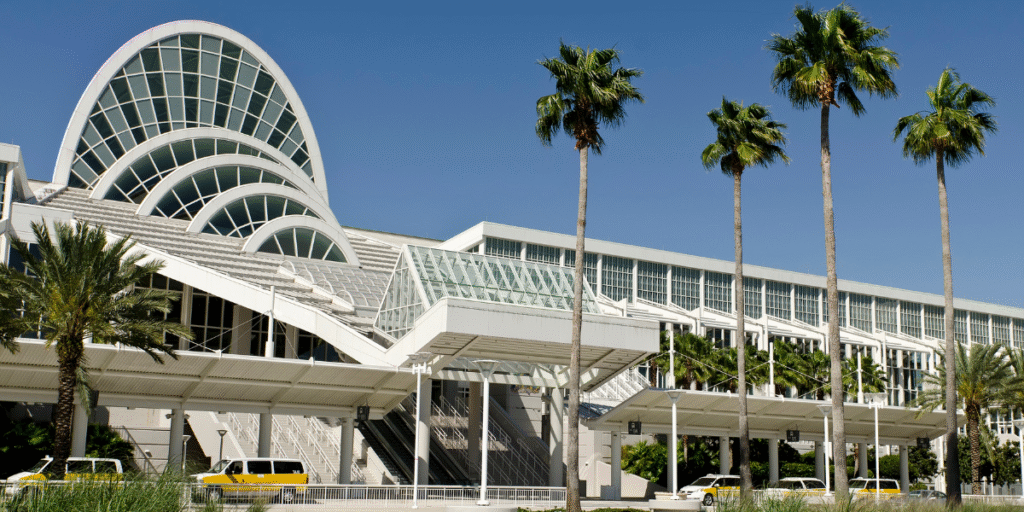
Special events amplify these patterns. Holidays such as Christmas, New Year’s, and the Fourth of July create citywide gridlock. Large conventions at the Orange County Convention Center also push additional traffic onto International Drive and I-4. Monitoring park crowd calendars can provide a useful forecast of road congestion because spikes in park attendance almost always mean slower highways nearby.
Orlando International Airport (MCO) Traffic
MCO is among the busiest airports in the country, with more than 50 million passengers annually. Road access to the airport is mainly via SR-528 and SR-417, both of which back up during peak travel windows. The airport advises arriving two hours before domestic flights and three hours before international flights.
The airport offers the MCO Reserve system, which allows passengers to book a TSA checkpoint time slot during peak periods. While this does not fix road congestion, it can shorten security waits once you are inside. For drivers, choosing the correct North or South Terminal entry avoids long loops around the airport property.
Timing Strategies
Traffic in Orlando follows predictable rhythms, but real-time conditions can shift quickly because of crashes, lane closures, or weather. General guidance is:
- Morning (6:00–10:00 a.m.): Expect inbound slowdowns toward downtown and I-4 attraction exits. I-4 Express is often worth the toll during this period.
- Mid-day (10:00 a.m.–3:00 p.m.): Still busy around tourist areas, especially International Drive, but beltways like SR-417 and SR-429 are usually smoother.
- Evening (3:30–7:00 p.m.): Heaviest congestion of the day, with westbound and eastbound lanes equally jammed. Dynamic tolls on I-4 Express reach their highest levels.
- Weekends and Holidays: Traffic peaks extend longer, often from mid-morning through late evening. On holiday weekends, expect delays across all major routes.
Local Insights and Common Pain Points
Local drivers frequently describe I-4 as unpredictable. A trip that should take 20 minutes can stretch into more than an hour with little warning. Interchanges at SR-535 (Lake Buena Vista), John Young Parkway, and SR-408 are particularly prone to slowdowns.
Residents often recommend using SR-417 or SR-429 as alternatives when traveling between the airport, Disney, or suburban communities. For convention traffic, Westwood Boulevard and Universal Boulevard are better choices than International Drive, which clogs quickly.
Tools That Actually Help
The most reliable way to plan around Orlando traffic is to use navigation apps with live congestion data and to enable toll routes. A SunPass or E-PASS transponder is essential for accessing I-4 Express and the beltway system. Without it, drivers must remain on general-purpose lanes where backups are common.
Monitoring FDOT alerts and local news also provides advance warning of accidents or lane closures. When major events are scheduled, assume delays and adjust departure times accordingly.
How YAZ Luxury Transportation Simplifies Orlando Travel
Orlando’s traffic patterns can overwhelm even experienced drivers. For visitors managing airport transfers, resort check-ins, or corporate schedules, the risk of delays is high. That’s why professional planning and the right vehicle matter.
At YAZ Luxury Transportation Corp., we build each trip around traffic forecasts, event calendars, and live FDOT updates. Our chauffeurs know when I-4 Express is worth the toll, when SR-417 or SR-429 will save time, and how to position drop-offs at MCO or resort entrances to minimize walking and waiting.
We provide a fleet that covers every travel need: luxury sedans for individuals, SUVs like the Cadillac Escalade and Chevy Suburban for small groups, stretch limousines for weddings and nights out, Sprinter coaches and executive vans for business teams, and mini buses or motor coaches for larger groups and event shuttles.
Whether it’s an early-morning airport transfer, group transportation to Walt Disney World, or a late-night return from a corporate gala, we assign the right vehicle and route to fit the schedule. Our combination of fleet diversity and local expertise allows us to deliver on-time arrivals in one of the busiest travel markets in the U.S.
Frequently Asked Questions
What time is Orlando traffic worst?
Weekdays from 7:00–9:30 a.m. and 4:00–6:30 p.m., with extended delays on weekends and holidays.
Is I-4 Express worth the toll?
Yes for time-sensitive trips during peak hours. Dynamic pricing means the cost rises with demand, but it often saves significant time.
What’s the best route from MCO to Disney?
SR-417 and SR-429 are usually faster than I-4, especially when the parks are opening or closing.
Does SR-528 get congested?
Yes, particularly during airport rush hours and space launch days. Plan around 6:30–9:00 a.m. and 4:00–6:30 p.m.
When are the roads around the parks quietest?
During off-peak travel seasons such as late January, early May, and mid-September.
When will I-4 construction be completed?
Major congestion relief projects are expected through 2025. Until then, delays remain common.
Final Thoughts
Orlando traffic is shaped by commuters, theme park visitors, and one of the busiest airports in the country. I-4 remains the central challenge, with unpredictable backups that frustrate residents and visitors alike. By understanding peak times, using toll beltways, and monitoring real-time conditions, travelers can cut down on wasted hours on the road.
At YAZ Luxury Transportation Corp., we design every trip around these realities. With professional chauffeurs, modern Sprinter vans, and real-time traffic monitoring, we provide the certainty and efficiency that standard transportation services cannot. When your schedule depends on arriving on time—whether at MCO, a resort, or a convention—we deliver.